


50 Cent’s net worth is estimated at $100 million as of 2026, a remarkable financial rehabilitation story for a man who filed for bankruptcy in 2015 at the height of public litigation. Curtis James Jackson III — born in South Jamaica, Queens, and shot nine times before his debut album changed music history — has built a diversified empire spanning hip-hop, television production, film, and his first major acting franchise role as Balrog in Legendary Entertainment’s live-action Street Fighter, releasing October 16, 2026.
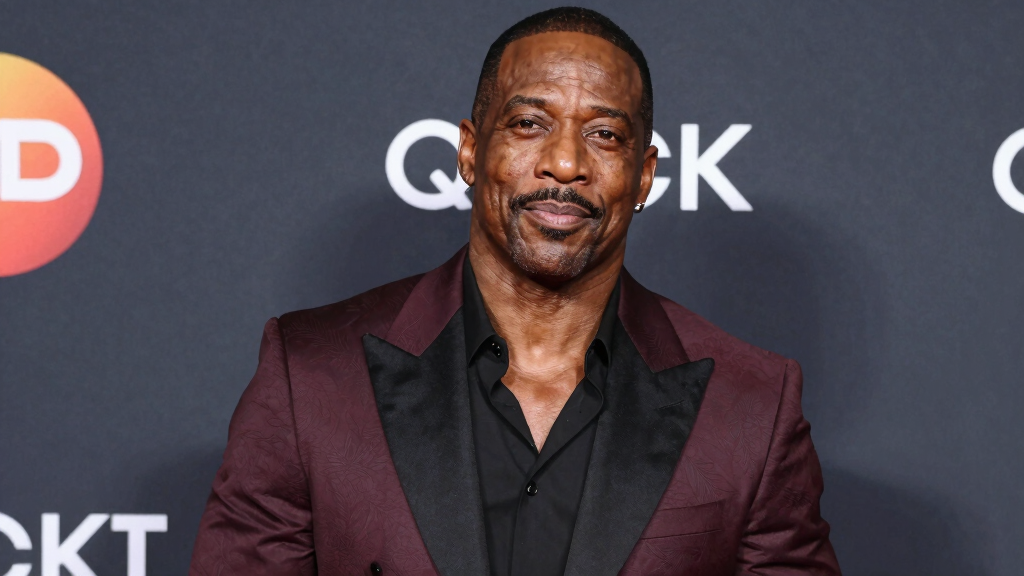
50 Cent — who survived being shot nine times, filed for bankruptcy, and rebuilt a $100M empire through the Power TV franchise and his G-Unit entertainment portfolio — plays Balrog in Street Fighter (October 16, 2026).
| Full Name | Curtis James Jackson III |
|---|---|
| Date of Birth | July 6, 1975 |
| Age | 51 years old |
| Birthplace | South Jamaica, Queens, New York City |
| Nationality | American |
| Height | 6’1″ (185 cm) |
| Profession | Rapper, Actor, Producer, Businessman |
| Net Worth | $100 Million (2026) |
| Known For | Get Rich or Die Tryin’, G-Unit, Power (Starz), Vitamin Water deal |
| Upcoming | Street Fighter as Balrog (October 16, 2026) |
How Does 50 Cent Make Money?
| Income Source | Estimated Amount | Type | Notes |
|---|---|---|---|
| Vitamin Water (Glacéau) deal | ~$100M | One-time (personal) | Personal equity payout after Coca-Cola acquired Glacéau for $4.1B in 2007; 50 Cent held minority stake |
| Power Franchise (Starz) | $2–4M/year | Annual (personal) | Executive producer on Power, Ghost, Raising Kanan, Force; producer fees across multiple series |
| Street Fighter (2026) | $3–6M est. | One-time (personal) | Estimated acting fee for Balrog role in Legendary’s live-action adaptation |
| Music (G-Unit, catalogue) | $2–5M/year | Annual (personal) | Streaming royalties on 30M+ albums sold; publishing catalogue income |
| G-Unit Films & Television | $1–3M/year | Annual (personal) | Production entity generating revenue beyond Starz deal |
| Endorsements & Appearances | $1–2M/year | Annual (personal) | Brand deals, club appearances, brand partnerships |
| Estimated Net Worth | $100 Million (2026) | ||
Early Life
Curtis James Jackson III was born on July 6, 1975, in South Jamaica, one of New York City’s most economically deprived neighbourhoods in the 1970s and 1980s. His mother, Sabrina, was a drug dealer who was killed when Curtis was eight years old — reportedly by carbon monoxide poisoning, though the circumstances have always been shrouded in mystery and he has spoken of her death as the defining trauma of his childhood.
He was raised by his grandparents in South Jamaica, and by the age of twelve was selling crack cocaine in the streets. He was caught in possession of heroin, crack cocaine, and a starter pistol during a high school search when he was fifteen, but avoided adult charges due to his age. He has spoken candidly about this period — not to glorify it but to contextualise where he came from.
His path out was rap. He began freestyling in the mid-1990s and attracted attention in New York’s underground circuit, eventually coming to the notice of Jam Master Jay of Run-D.M.C., who took him under his wing and taught him song structure. After Jay’s murder in 2002, 50 Cent continued building momentum through mixtapes that circulated through New York’s boroughs with unprecedented viral reach for the pre-internet era.
Career and Rise to Fame
The shooting that defined his mythology occurred on May 24, 2000, outside his grandmother’s home in South Jamaica. 50 Cent was struck by nine bullets at close range — including shots to the hand, arm, hip, leg, chest, and face — and survived after nearly two weeks in the hospital. He lost a tooth and was left with permanently impaired speech due to the facial wound. The incident, rather than ending his career, supercharged it: “Get Rich or Die Tryin'” became the title of his debut album and the philosophical statement of his artistic identity.
Eminem heard his mixtapes, was struck by the storytelling and flow, and brought him to Dr. Dre. The partnership produced one of the most commercially explosive debuts in rap history: Get Rich or Die Tryin’ (2003) sold over 15 million copies worldwide and debuted at #1, making 50 Cent the dominant hip-hop figure of the mid-2000s. Singles including “In Da Club,” “21 Questions,” and “P.I.M.P.” crossed mainstream radio in ways that most rap rarely achieved.
The business acumen arrived alongside the music. His equity stake in Vitamin Water — taken as compensation rather than cash for promoting the brand — yielded approximately $100 million when Coca-Cola acquired parent company Glacéau for $4.1 billion in 2007. It remains the single largest windfall of his financial career and the transaction that permanently reframed him as a businessman rather than just a rapper.
His television production career, launched with Power on Starz (2014), has generated more sustained income than any single music release. The series — about a drug kingpin trying to go legitimate — ran for six seasons and spawned spinoffs Power Book II: Ghost, Power Book III: Raising Kanan, and Power Book IV: Force, with Power: Legacy announced in 2026 as what 50 Cent calls the final chapter. As executive producer across all of them, he earns production fees per episode across multiple concurrent series — a revenue model that has outlasted his peak music era by years.

50 Cent’s touring and live performance career has generated tens of millions in personal income, with his hip-hop catalogue — headlined by Get Rich or Die Tryin’ (15M+ copies sold) — continuing to drive streaming royalties globally.
Personal Life
50 Cent has two sons: Marquise Jackson (born 1997, with Shaniqua Tompkins) and Sire Jackson (born 2012, with model Daphne Joy). His relationship with Marquise has been publicly strained and widely documented — father and son have exchanged pointed words on social media. His relationship with Sire has been warmer and more public, with the younger son appearing frequently in his content.
He filed for bankruptcy in July 2015 with reported liabilities of $28 million, largely due to a $5 million jury verdict in a sex tape lawsuit and ongoing litigation from his former business partners. He emerged from bankruptcy in 2016 after restructuring his debts, having protected his core assets including his G-Unit brands and Power production deal. The episode was a public humiliation but ultimately a financial reset that cleared his litigation exposure.
Net Worth History
50 Cent’s net worth trajectory is one of the more volatile in celebrity finance. The Vitamin Water payout (2007) pushed his net worth to an estimated $150–200 million at peak. A series of expensive lawsuits, judgements, and settlements through the early 2010s eroded that significantly. The 2015 bankruptcy, while shocking in its optics, was a strategic restructuring that protected his operating businesses. By 2020 the Power franchise had rebuilt his position to approximately $60–70 million. The 2026 estimate of $100 million reflects the cumulative income from multiple Power spinoffs running concurrently, plus a new acting salary from Street Fighter.
Little-Known Facts About 50 Cent
- He was signed and then dropped by Columbia Records before finding success — after the shooting in 2000, Columbia dropped him under pressure, and he rebuilt through mixtapes that some estimate he distributed 1 million copies of across New York City for free.
- He took a Vitamin Water equity stake instead of cash — at a time when most celebrity endorsers took flat fees, his decision to accept ownership transformed a modest brand deal into a $100 million windfall when Coca-Cola bought the parent company.
- He produced Power: Legacy entirely with new showrunners — his 2026 announcement confirmed this would be the final Power spinoff, marking a deliberate decision to exit the franchise rather than continuing indefinitely.
- His social media persona is deliberately confrontational — 50 Cent has cultivated one of the most entertaining (and legally risky) celebrity social media presences, routinely provoking feuds that keep him relevant between entertainment projects.
- He appeared in his own biopic — 50 Cent produced and starred in Get Rich or Die Tryin’ (2005, dir. Jim Sheridan), a semi-autobiographical film about his rise from Queens to global stardom.
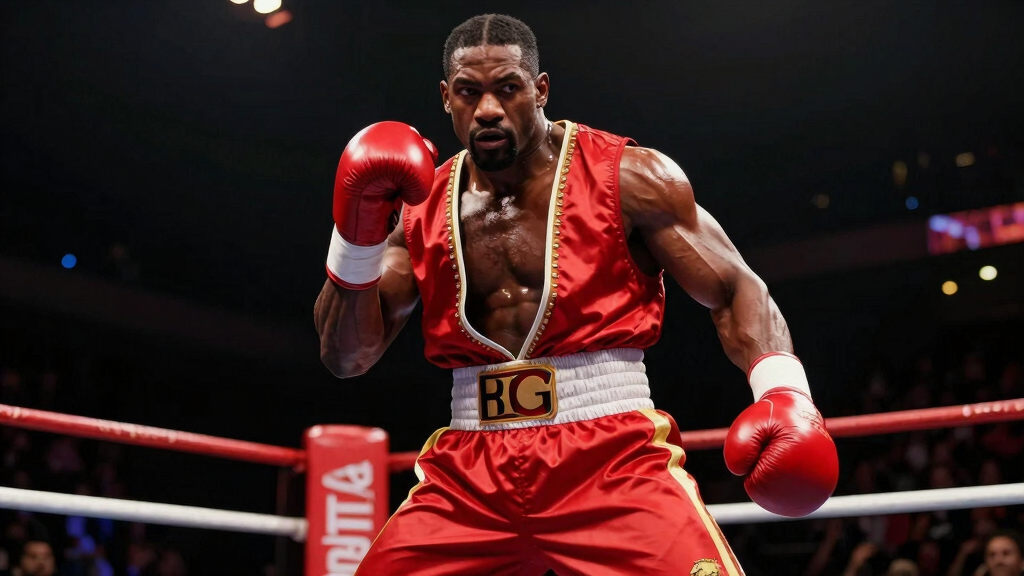
In Street Fighter (October 16, 2026), 50 Cent takes on the role of Balrog — the franchise’s iconic Las Vegas heavyweight boxer — in Legendary Entertainment’s live-action adaptation alongside Jason Momoa, Roman Reigns, and Cody Rhodes.
Frequently Asked Questions About 50 Cent
What is 50 Cent’s net worth in 2026?
50 Cent’s net worth is estimated at approximately $100 million as of 2026. His wealth comes from the $100 million Vitamin Water equity payout (2007), his executive producer position across the Power franchise on Starz (multiple concurrent spinoffs), music royalties on 30+ million albums sold, and new acting income from the Street Fighter film. Note: estimates vary widely because his assets include private equity stakes that are difficult to value — some sources place him lower ($30–40M) based on conservative asset valuations.
Who is 50 Cent playing in Street Fighter 2026?
50 Cent plays Balrog in Legendary Entertainment’s live-action Street Fighter film (October 16, 2026). Balrog is the franchise’s iconic Las Vegas heavyweight boxer — a villain associated with ruthless ambition and raw power. The casting pairs 50 Cent’s real-world charisma and physicality with one of Street Fighter’s most recognisable characters. The film also stars Andrew Koji as Ryu, Jason Momoa as Blanka, Roman Reigns as Akuma, and Cody Rhodes as Guile.
How did 50 Cent make his money from Vitamin Water?
50 Cent received an equity stake in Glacéau (Vitamin Water’s parent company) as partial compensation for promoting the brand in the mid-2000s, rather than accepting a traditional flat endorsement fee. When Coca-Cola acquired Glacéau for $4.1 billion in 2007, 50 Cent’s stake yielded an estimated $100 million after taxes. The deal has become one of the most-cited examples in music industry history of a celebrity taking equity over cash — a model since adopted by dozens of artists.
Why did 50 Cent file for bankruptcy?
50 Cent filed for Chapter 11 bankruptcy in July 2015, reporting liabilities of approximately $28 million. The primary trigger was a $5 million jury verdict against him in a sex tape lawsuit brought by Lastonia Leviston, compounded by ongoing litigation from former business partners. Chapter 11 allowed him to restructure debts while protecting core operating businesses — he emerged in 2016 with his G-Unit brands and Power production deal intact. The bankruptcy is widely regarded as a strategic restructuring rather than genuine financial collapse.
What is the Power franchise and how does it earn 50 Cent money?
Power is a Starz drama series created by Courtney Kemp and executive produced by 50 Cent, which premiered in 2014 and ran for six seasons. It spawned multiple spinoffs: Power Book II: Ghost, Power Book III: Raising Kanan, Power Book IV: Force, and Power: Legacy (announced 2026). As executive producer on all of them, 50 Cent earns a fee on every episode produced — across multiple concurrent series, this generates millions in annual income without requiring him to perform or tour. The franchise has been his most durable and consistent earning vehicle since the Vitamin Water windfall.