


Alan Shearer is the Premier League’s all-time leading scorer and one of English football’s most enduring icons. A centre-forward of remarkable power and consistency, he scored 260 Premier League goals across his career — a record that still stands nearly two decades after his retirement. As of 2026, Alan Shearer’s net worth is estimated at approximately £40 million ($50 million), built through football earnings, endorsements, property, and a long-running career as one of the BBC’s most recognisable sporting presenters.
| Full Name | Alan Shearer CBE |
|---|---|
| Date of Birth | 13 August 1970 |
| Age | 55 years old |
| Birthplace | Gosforth, Newcastle upon Tyne, England |
| Nationality | British |
| Profession | Former Footballer; BBC Football Pundit |
| Net Worth | £40 Million / $50 Million (2026) |
| Premier League Goals | 260 (all-time record) |
| Known For | PL all-time top scorer; Newcastle United legend; Match of the Day pundit |
Early Life & Education
Alan Shearer was born on 13 August 1970 in Gosforth, a suburb of Newcastle upon Tyne in northeast England, into a working-class family. His father Alan Sr. was a sheet metal worker and his mother Anne worked in a canteen — a grounded, modest upbringing that Shearer has frequently credited for the work ethic and determination that defined his playing career.
He attended Gosforth Central Middle School and Gosforth High School, where his talent for football was quickly evident. As a teenager, he was scouted by several clubs before choosing Southampton, where he moved south as a young apprentice. Shearer was never the flashiest of youngsters, but from the outset coaches noted his exceptional positional intelligence, physical strength, and composure in front of goal — qualities that would later make him the most prolific scorer in Premier League history.
Growing up a Newcastle fan, Shearer always carried the dream of one day representing his hometown club. That dream would eventually be realised — at a world-record transfer fee — but only after he had already established himself as one of the finest strikers of his generation at Southampton and Blackburn Rovers.
Career Timeline
Southampton (1988–1992)
Alan Shearer made his professional debut for Southampton on 9 April 1988 at the age of just 17, scoring a hat-trick against Arsenal at The Dell — the youngest player to score a First Division hat-trick at the time. The record-breaking debut announced him as a striker of extraordinary promise. Over four seasons at Southampton, he established himself as a consistent and dangerous centre-forward, earning his first England Under-21 and senior caps during this period.
Blackburn Rovers (1992–1996): The £3.6M Transfer and Premier League Glory
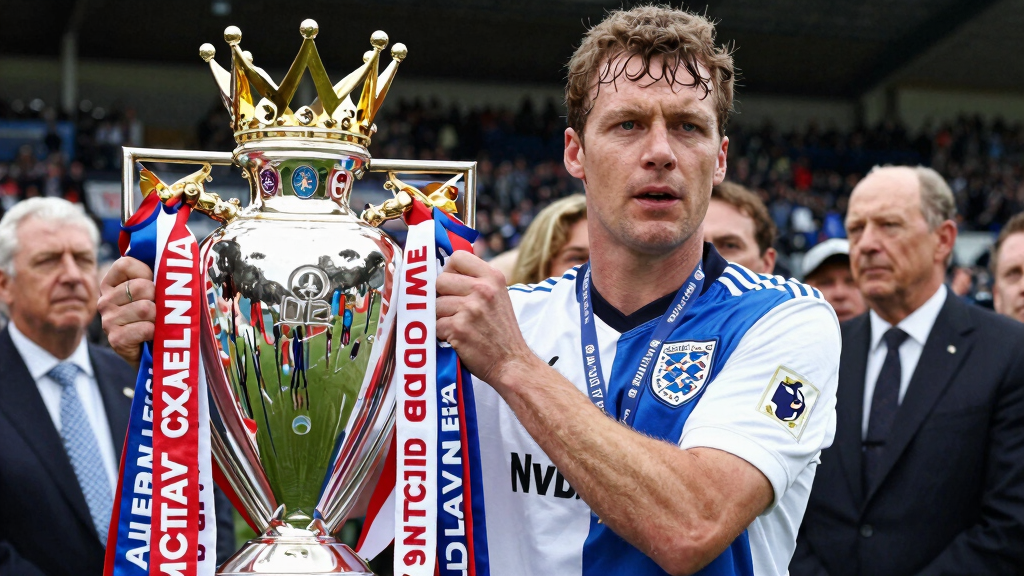
In July 1992, Blackburn Rovers manager Kenny Dalglish signed Shearer for a then-British record fee of £3.6 million. The timing was perfect — the Premier League had just launched, offering vastly higher wages and a bigger commercial platform than the old First Division. Shearer thrived under Dalglish, forming a devastating partnership with Chris Sutton — the pair nicknamed “SAS” (Shearer and Sutton) by supporters. Together they fired Blackburn to the Premier League title in 1994–95, with Shearer scoring 34 goals that season. Shearer won the Premier League Golden Boot in three consecutive seasons (1994–95, 1995–96) and was named PFA Players’ Player of the Year in 1995.
Newcastle United (1996–2006): The World Record Return Home
In July 1996, Newcastle United broke the world transfer record to bring Shearer home, paying Blackburn £15 million — an extraordinary fee for the era. Despite Newcastle never winning a major trophy during his decade at the club, Shearer became the focal point of the team and a totemic figure for supporters who adored him. He captained the club through some of its most turbulent periods, eventually retiring in 2006 as Newcastle’s all-time leading scorer. His loyalty to the club — declining moves to Manchester United and other major European clubs — only enhanced his legendary status on Tyneside.
Net Worth & Income Sources
Alan Shearer’s net worth of approximately £40 million has been built across three distinct phases. During his playing career (1988–2006), he was one of England’s highest-paid footballers — his Newcastle wages at their peak reportedly reached £30,000–£40,000 per week in an era before Premier League salaries fully exploded, supplemented by endorsement deals including his long association with Umbro. His £15 million transfer fee did not go directly to him, but it reflected his market value and gave him significant negotiating leverage on subsequent contracts.
How Does Alan Shearer Make Money?
| Income Source | Estimated Amount | Type | Notes |
|---|---|---|---|
| Football Career Earnings | £15–20M (estimated career total) | Cumulative | Wages across Southampton, Blackburn, Newcastle 1988–2006; major contracts at Blackburn and Newcastle |
| BBC Match of the Day Salary | £450,000/year | Annual (personal) | Reported BBC salary; behind Gary Lineker as presenter but among BBC Sport’s top earners |
| Endorsements & Appearances | £200–400K/year (career peak) | Annual (personal) | Umbro sponsorship, commercial deals during playing career; ongoing appearance fees post-retirement |
| Property Investments | £5–8M (estimated value) | Cumulative | UK property portfolio built over career; reported Northumberland and Newcastle properties |
| Business Interests | £1–2M | Cumulative | Various business investments and shareholdings accumulated post-retirement |
| Estimated Total Net Worth | £40 Million / $50 Million (2026) | ||
Net Worth Over Time
In his early career at Southampton, Shearer’s earnings were modest by later standards — typical First Division professional wages of the late 1980s. The move to Blackburn in 1992 marked a step change, with his wages reflecting his status as the Premier League’s most prolific striker. The £15 million move to Newcastle in 1996 came with a reported contract worth £25,000–£30,000 per week — substantial for the era. By the time of his retirement in 2006, accumulated wages, endorsements, and investments had built a fortune estimated at £20–25 million. His BBC career, now spanning nearly two decades, has added roughly £8–9 million in additional income at £450,000 per year.
Personal Life & Relationships
Alan Shearer has been married to Lainya Shearer (née Shearer) since 1991. The couple met as teenagers in Newcastle and have remained together throughout the peaks and pressures of his high-profile career — a stability that Shearer has said was crucial to his success. They have three children: Chloe, Will, and Hollie. The family has primarily been based in the northeast of England, reflecting Shearer’s deep attachment to the region. Unlike many footballers who relocate to London or abroad after retirement, Shearer has remained rooted in the community where he grew up and where he is treated as something close to royalty.
Awards & Recognition
Alan Shearer was appointed Commander of the Order of the British Empire (CBE) in the 2001 Queen’s Birthday Honours for services to football. He was inducted into the Premier League Hall of Fame in 2021 alongside Thierry Henry as the inaugural inductees — a recognition of his status as one of the competition’s defining players. He received the PFA Players’ Player of the Year award in 1995 and was named Football Writers’ Association Footballer of the Year in 1994. A statue of Shearer stands outside St James’ Park in Newcastle — an honour reserved for the very greatest figures in a club’s history.
Little-Known Facts About Alan Shearer
- His hat-trick on his professional debut for Southampton in April 1988 made him the youngest player to score a First Division hat-trick — a record he held for many years.
- Shearer turned down Manchester United multiple times during his career, most notably when he chose Newcastle over Sir Alex Ferguson’s club in 1996 — one of football’s most significant transfer decisions of the era.
- He briefly became Newcastle’s caretaker manager in April 2009, taking charge for the final eight games of the season in an attempt to keep the club in the Premier League — but was unable to prevent relegation.
- Shearer scored 30 goals for England in 63 appearances — a record that lasted for many years and remains among the top scoring records in England’s history.
- He has spoken openly about suffering from a form of the neurological condition linked to heading footballs, raising awareness of the long-term health risks of heading in the sport.
Also Read:
What is Alan Shearer’s net worth in 2026?
Alan Shearer’s net worth in 2026 is estimated at approximately £40 million ($50 million). His wealth comes from his 18-year professional football career, his ongoing BBC Match of the Day punditry role earning £450,000 per year, historical endorsement deals, and property and business investments made throughout and after his playing career.
How many Premier League goals did Alan Shearer score?
Alan Shearer scored 260 Premier League goals — the all-time record, which still stands as of 2026. He achieved this across three clubs: Southampton, Blackburn Rovers, and Newcastle United, making him the only player to score over 200 Premier League goals. His tally is widely considered one of football’s most unbreakable individual records.
Does Alan Shearer still work for the BBC?
Yes, as of 2026 Alan Shearer continues to work as a football pundit and analyst for the BBC, primarily on Match of the Day. He has been a regular presence on the show since retiring from professional football in 2006 and is one of the BBC’s highest-paid sporting personalities, reportedly earning £450,000 per year.
Why did Alan Shearer never win the Premier League with Newcastle?
Alan Shearer joined Newcastle United in 1996 partly out of loyalty to his hometown club rather than choosing a club better-positioned to win trophies. Despite some memorable runs to FA Cup finals, Newcastle were never consistently strong enough to challenge for the Premier League title during Shearer’s decade at the club. The decision to prioritise his roots over silverware is widely seen as the defining sacrifice of his career — and has only enhanced his legendary status among Newcastle supporters.