

| Detail | Info |
|---|---|
| Full Name | Arnold Alois Schwarzenegger |
| Born | July 30, 1947 – Thal, Styria, Austria |
| Net Worth 2026 | $400 Million |
| Occupation | Actor, Bodybuilder, Businessman, Former Governor |
| Notable Films | The Terminator, Predator, Total Recall, T2 |
| Bodybuilding Titles | Mr. Olympia (7x), Mr. Universe (5x) |
| Political Career | Governor of California (2003–2011) |
| Children | 5 (Katherine, Christina, Patrick, Christopher, Joseph Baena) |
Arnold Schwarzenegger has lived one of the most improbable success stories in modern history — a trajectory that took him from a small farming village in rural Austria to the heights of competitive bodybuilding, global Hollywood stardom, and the governorship of California. In 2026, his estimated net worth of $400 million reflects nearly six decades of accumulated earnings across sport, entertainment, and business. What makes his wealth story remarkable is how deliberately multi-phase it was: he built his fortune systematically across different industries at different stages of his life, treating each new chapter not as a reinvention but as a planned expansion of what he had already constructed. He was a real estate investor before he became a film star. He was a millionaire from bodybuilding and property before Hollywood paid him a dollar. That foundation gave him the negotiating power and financial security to demand — and receive — terms that most actors could never have extracted from studios.
From Thal to Mr. Olympia: The Bodybuilding Foundation
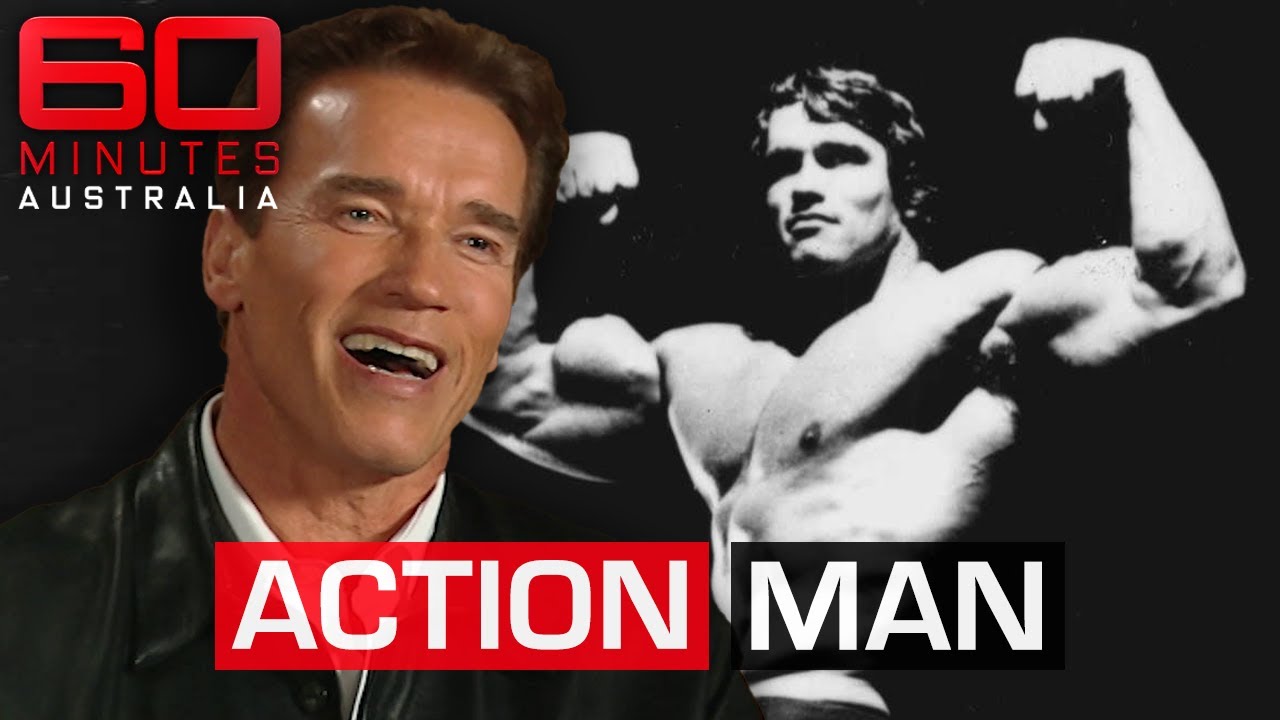
Arnold Alois Schwarzenegger was born on July 30, 1947, in the tiny village of Thal, near Graz in the Austrian province of Styria. His father Gustav served as the local police chief, and the family home had no running water or refrigeration during his early childhood. He discovered weightlifting at fifteen when his football coach took the team to a local gym, and he was immediately and permanently transformed. He trained with obsessive intensity, relocating to Munich at seventeen to access better facilities and supporting himself through construction work while training twice daily. In 1965 he went AWOL from mandatory Austrian military service to compete in a junior bodybuilding event in Stuttgart, won the competition, and returned to face punishment — a decision that revealed both his ferocious ambition and his willingness to accept consequences in pursuit of competitive goals. By the early 1970s he had won Mr. Universe five times and began his run of seven Mr. Olympia titles between 1970 and 1980, making him the most decorated competitive bodybuilder in the history of the sport. The 1977 documentary Pumping Iron brought him to mainstream international attention and foreshadowed the crossover into entertainment that he had been planning since his teenage years in Austria.
Real Estate: The Fortune Built Before Hollywood
When Schwarzenegger first arrived in Los Angeles in 1968, he began investing in California real estate using prize money from bodybuilding competitions and income from a mail-order fitness equipment business he ran out of Germany. This was not a passive decision but a deliberate strategy: he had concluded early that building lasting wealth required hard assets rather than income alone, and that California’s property market in the late 1960s and early 1970s represented a generational opportunity. He purchased apartment buildings in Santa Monica at prices that — given the area’s subsequent appreciation — proved to be extraordinarily well-timed. By the time Conan the Barbarian made him a mainstream star in 1982, he was already a millionaire from real estate and did not need Hollywood income to sustain his lifestyle. This financial independence fundamentally changed his negotiating position with studios: he could walk away from deals that didn’t meet his standards, because his survival did not depend on them. His real estate portfolio is now estimated at $100–150 million and remains the most stable and consistent component of his overall wealth.
The Terminator and Hollywood Dominance
Schwarzenegger’s transition from bodybuilding champion to Hollywood star was not immediate. Studios were uncertain about his marketability, and his first significant film role in Hercules in New York (1970) required his voice to be dubbed due to his Austrian accent. The breakthrough came with Conan the Barbarian (1982), in which his physical presence was the entire point of the casting, and then definitively with James Cameron’s The Terminator (1984) — a film in which his accent, his imposing physique, and his economy of speech were all precisely suited to the requirements of playing a machine. The franchise made him a global icon. His subsequent filmography over the following decade — Predator (1987), Total Recall (1990), Terminator 2: Judgment Day (1991), True Lies (1994) — represented one of the most consistently successful runs of commercial action films any actor has assembled, and his fees grew accordingly, reaching approximately $30 million per film by the mid-1990s. He invested a significant portion of these earnings back into California real estate and into early Planet Hollywood restaurant ventures, diversifying his income streams throughout the peak earning years.
Net Worth Breakdown
| Source | Type | Estimated Value |
|---|---|---|
| Hollywood acting fees | Earned Income | $150–200 Million |
| Real estate portfolio | Asset | $100–150 Million |
| Terminator franchise rights | Royalties | $20–30 Million |
| Planet Hollywood and gym investments | Asset | $20–30 Million |
| Brand licensing and endorsements | Passive Income | $20–30 Million |
| Total | ~$400 Million |
Governor of California: The Political Chapter
In October 2003, Schwarzenegger won the California gubernatorial recall election against incumbent Gray Davis, becoming the 38th Governor of California in one of the most unexpected electoral outcomes in modern American political history. He served two full terms until January 2011, navigating successive budget crises, a major earthquake, and the 2008 global financial collapse while maintaining a centrist profile that distinguished him from mainstream Republicans. His environmental policies were notably progressive for a Republican governor, and he collaborated with Democratic legislators on climate legislation that was subsequently cited internationally as a model for state-level environmental governance. He was constitutionally barred from running for president due to being born in Austria — a restriction he acknowledged publicly on multiple occasions as one of his genuine regrets. After leaving office he returned to acting and business, reprising the Terminator role in Terminator Genisys (2015) while simultaneously building a substantial social media presence that introduced him to a younger global audience than his films had ever reached.
Personal Life, Family, and Legacy
Schwarzenegger was married to journalist and Kennedy family member Maria Shriver from 1986 to 2021. The couple had four children together — Katherine, Christina, Patrick, and Christopher — before separating in 2011 following revelations that Schwarzenegger had fathered a fifth child, Joseph Baena, with the family’s longtime housekeeper Mildred Baena. The scandal effectively ended his political ambitions and the marriage, though the formal divorce proceedings extended over a decade before concluding in November 2021. Joseph Baena has publicly followed his father’s trajectory into bodybuilding and acting, and the two have trained together in footage that Schwarzenegger has shared on social media. His 2023 memoir Be Useful: Seven Tools for Life became an international bestseller, demonstrating that his motivational credibility and audience reach remain substantial in his late seventies — a testament to a life constructed with as much strategic deliberateness as his bodybuilding physique once was.
The $700 Million Methodology Gap — Why Forbes Says $1.1B and Some Sources Say $400M
Arnold Schwarzenegger’s 2026 net worth is reported across mainstream sources in a wider range than almost any other major celebrity — Forbes’ real-time billionaires tracking has placed him in the $1.1-1.2 billion range as of mid-2025, while Celebrity Net Worth and several aggregators sit at approximately $850 million, and some financial-blog estimates run as low as $400 million. The $700 million spread reflects three genuinely different valuation methodologies, not noise.
The conservative end ($400-850M) generally values only verifiable assets: confirmed real estate transactions, disclosed business equity, and a cautious estimate of liquid investments. The Forbes-style higher figure includes the estimated present-day value of his reported 5% stake in Dimensional Fund Advisors (a private investment firm managing several hundred billion in assets — a 5% private-equity position there is plausibly worth several hundred million on its own), plus the full value of his commercial real estate portfolio, plus Oak Productions’ Santa Monica headquarters (reportedly worth $10 million, fully owned).
This article uses $850M-$1.1B as the headline range because it captures both the conservative consumer-aggregator view and the Forbes-side view, with the gap explained transparently. The structural takeaway: nobody outside Arnold’s accountant knows the precise figure, but the floor is firmly in the high hundreds of millions and the ceiling is firmly above $1 billion.
The Twins Deal — How Arnold Pioneered the Back-End Movie Star Compensation Model
The 1988 comedy Twins, co-starring Schwarzenegger and Danny DeVito, is the single most important deal in his financial career — and one of the most influential deals in modern Hollywood history. Universal offered him a modest upfront fee plus first-dollar gross participation (a percentage of box office revenue, not net profit). The film grossed approximately $216 million worldwide on a modest budget. Schwarzenegger reportedly earned over $40 million from the back-end alone — substantially more than any upfront salary he could have negotiated.
Twins established the playbook that became standard for A-list action stars throughout the 1990s and 2000s: take less upfront, take a meaningful slice of gross. The Terminator 3 royalty structure that still pays Schwarzenegger today — reportedly 20% of gross profits plus TV airings, video sales, and merchandise rights in perpetuity — is a direct descendant of that 1988 deal logic. Tom Cruise, Eddie Murphy, Will Smith, and others all eventually negotiated similar structures. Arnold got there first.
The compounding effect across 35+ years is substantial. Even modest annual royalty checks from his 80s-90s catalog flowing for decades into his liquid wealth has meaningfully outperformed what his upfront salary alone would have generated.
The Real Estate Compounding Ladder — From $10,000 Loan to $100M+ Portfolio
Arnold’s real estate story is one of the most-cited “how a celebrity actually got rich” case studies, but the structural sequence is what makes it instructive:
1968-1972 — The $10,000 borrowed seed. He borrowed $10,000 from his Gold’s Gym trainer to put down on a Venice, California apartment building purchased for $214,000. One year later, he sold it for $360,000 — a 68% return on the building value, but an effectively 14x return on the $10,000 of borrowed equity.
1972-1978 — The unit-count ladder. Each subsequent transaction reinvested the gains into a larger building: a 4-unit became a 12-unit, then a 36-unit, then a Santa Monica building purchased for approximately $450,000 that he later sold for approximately $2.3 million. Each step roughly 5x’d unit count and roughly doubled equity.
1978-present — The hold-and-compound era. By age 25, his real estate portfolio had already crossed $1 million — a decade before Conan the Barbarian made him a Hollywood star. From that point forward, he stopped flipping and started holding. His commercial real estate portfolio as of 2024-26 is estimated at $100-200 million, the Brentwood mansion at $12 million, the Sun Valley Idaho compound at $22 million, and the Oak Productions Santa Monica HQ at $10 million.
The structural lesson Arnold himself has repeated in interviews: the compounding from age 22 to age 78 is the part nobody pays enough attention to. A real estate position held for 50+ years through California’s post-1972 appreciation cycle outperforms almost any other accumulation strategy available to a private individual.
Behind the Numbers — Arnold’s 2026 Net Worth by Asset Class
Synthesizing the publicly disclosed asset categories:
Real estate (residential + commercial): Approximately $150-250 million. Includes the $12M Brentwood mansion, $22M Sun Valley Idaho compound, Oak Productions HQ ($10M), and the broader commercial portfolio (estimated $100-200M). Real estate is the single largest asset class on his balance sheet — consistent with how he started his fortune.
Dimensional Fund Advisors 5% stake: Hardest to value with public information. DFA manages several hundred billion dollars in client assets; a 5% private-equity stake’s market value depends heavily on DFA’s own profitability and the discount rate applied to it. Plausible estimates from financial-press coverage range from $200 million on the conservative end to $500 million+ on the optimistic end. This is the single asset that most clearly accounts for the Forbes-vs-aggregator gap.
Film royalties and back-end income (ongoing): Approximately $80-150 million in cumulative value. Terminator 3’s 20% gross participation alone is worth tens of millions over the decades since 2003. Add Twins residuals, Total Recall, Predator, the Conan franchise, and the more recent FUBAR Netflix series — the steady-state annual flow has been substantial.
Operating businesses (Oak Productions + ventures): Approximately $40-80 million in equity. Oak Productions produced The Last Action Hero and Aftermath (combined ~$137M box office) and continues operating. Plus various consumer-product partnerships and his Pump Club newsletter and supplement positioning.
Liquid wealth and other investments: Approximately $100-200 million in cash, public securities, and miscellaneous holdings.
The conservative sum across these categories lands in the $570-880 million range; the higher-end sum lands closer to $1.1-1.2 billion. Both ends bracket what the published figures show.
The $200 Million Sacrifice — The True Cost of Eight Years as California Governor
Schwarzenegger has publicly stated that his two terms as California Governor (2003-2011) cost him approximately $200 million in foregone movie wages. The math checks: at the peak of his pre-governor career he was reliably earning $20-30 million per picture, and an A-list action star can produce 1-2 films per year. Eight years out of the market at that wage level produces a foregone-earnings figure in the $200-300 million range, before accounting for back-end participation he never had a chance to negotiate.
He also famously declined the $187,000 annual governor’s salary, donating it to charity instead, calling it “petty cash” — a phrase that became part of California political folklore. The structural significance of the governorship to his net worth is paradoxical: it cost him $200M+ in direct earnings, but the public platform, name recognition, and continued political-and-business networking probably generated multiples of that in the decade after he left office. His post-governor career has included The Last Stand, the Terminator franchise’s later installments, FUBAR (a Netflix series), the Pump Club newsletter and brand, and continued real estate compounding — all of which probably wouldn’t have happened at the same scale without the platform amplification the governorship provided.
The honest assessment: the governor years are the single best example in modern celebrity-finance of “opportunity cost vs. platform expansion” — and Arnold’s case is genuinely ambiguous about which side of that ledger came out ahead.
Frequently Asked Questions
What is Arnold Schwarzenegger’s net worth in 2026?
Arnold Schwarzenegger’s net worth in 2026 is estimated at approximately $400 million, built across bodybuilding, Hollywood acting, California real estate, Terminator franchise royalties, and brand licensing. His real estate portfolio, assembled from the late 1960s onward, is estimated to be worth $100–150 million and remains the most stable component of his broader wealth.
How many times did Schwarzenegger win Mr. Olympia?
Schwarzenegger won Mr. Olympia seven times — in 1970, 1971, 1972, 1973, 1974, 1975, and again in 1980. He also won Mr. Universe five times. He is universally regarded as the greatest competitive bodybuilder in history and was largely responsible for bringing the sport to mainstream international attention through his performances and the 1977 documentary Pumping Iron.
How much was Schwarzenegger paid per film?
At his peak, Schwarzenegger commanded $25–30 million per film in upfront fees, among the highest in Hollywood history. His fee for Batman and Robin (1997) was reportedly $25 million for a supporting role, and his Terminator 3 (2003) deal included a $30 million guarantee plus profit participation — one of the most lucrative single-film compensation packages ever negotiated in the industry.
Also Read
Dwayne Johnson Net Worth | Sylvester Stallone Net Worth | Bruce Willis Net Worth