

In 1999, a scruffy Essex boy with a motorbike and a market-stall accent showed up on British TV and changed the way a generation cooked. Twenty-seven years later, Jamie Oliver’s empire — 24+ books, six active TV formats, a rebuilt restaurant business, and a global multimedia brand — is estimated at £240 million. The restaurant collapse of 2019 threatened to define his legacy, but the Essex chef has consistently been more resilient than his critics anticipated.
| Full Name | James Trevor Oliver |
|---|---|
| Date of Birth | May 27, 1975 |
| Age | 51 years old |
| Height | 5’11” (180 cm) |
| Nationality | British |
| Profession | Chef, TV Presenter, Author, Restaurateur |
| Net Worth | £240 Million / ~$300M (2026) |
| Spouse | Juliette Norton (“Jools”), married 2000 |
| Children | 5 (Poppy Honey Rosie, Daisy Boo, Petal Blossom, Buddy Bear, River Rocket) |
Early Life & Education
James Trevor Oliver was born on May 27, 1975, in Clavering, a village in rural Essex, to Trevor and Sally Oliver. His parents ran The Cricketers pub, and Jamie spent his childhood in the pub kitchen, learning to handle produce and develop an instinctive feel for cooking that no formal training could replicate. He was a mediocre academic student — later diagnosed with dyslexia — but found confidence and identity in the kitchen.
He trained at Westminster Kingsway College in London, then completed a course at the Institut Hôtelier Antonio Peres in Paris. Back in London, he worked at the River Café under Ruth Rogers and Rose Gray — an influential Italian-influenced restaurant that shaped his approach to simple, ingredient-led cooking. It was during a BBC documentary about the River Café that a young Jamie Oliver caught the eye of TV producers who would change his life.
Career Timeline
The Naked Chef & Early Television (1999–2004)
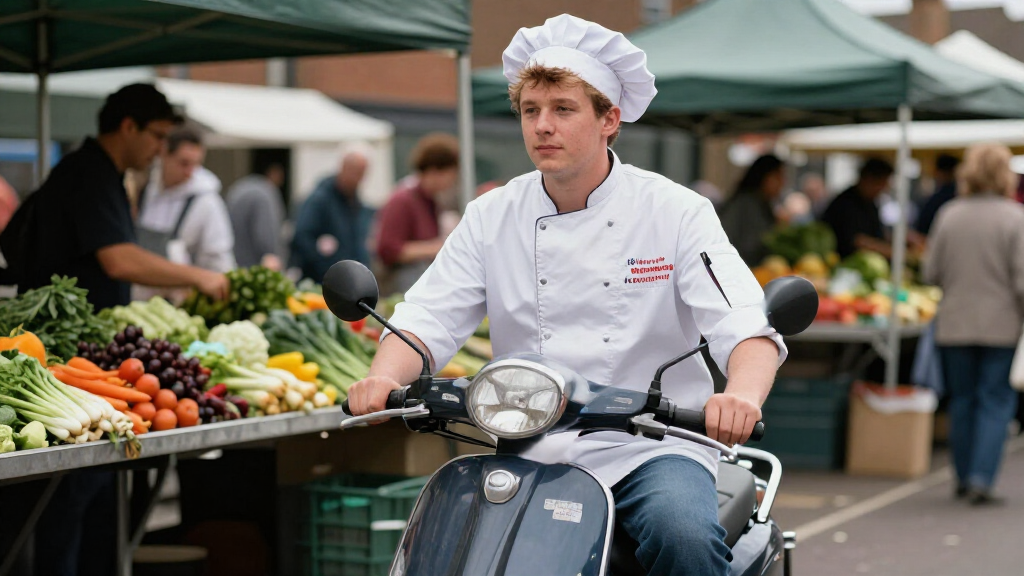
“The Naked Chef” debuted on the BBC in April 1999 and became a cultural phenomenon. Forget the studio setup and stiff presentation of most food TV — Oliver cooked at home, shopped at market stalls, rode a Vespa, and talked to the camera like a friend. The show’s first series attracted over four million viewers and launched a companion cookbook that sold over a million copies in the UK alone.
Three series of The Naked Chef, followed by “Jamie’s Kitchen” (2002) and “Jamie’s School Dinners” (2005), established Oliver as Britain’s most visible food advocate. His global reach was confirmed by US versions of his shows, a Sainsbury’s advertising deal worth an estimated £1.2 million per year at its peak, and publishing deals across dozens of countries.
School Dinners, Sugar Tax & Policy Impact (2005–2013)
“Jamie’s School Dinners” (2005) was more than a TV show — it was one of the most effective pieces of TV advocacy in British broadcasting history. Oliver’s campaign to replace processed junk food with fresh, nutritionally sound meals in UK state schools led directly to a £280 million government investment in school food improvements. His US equivalent, “Jamie Oliver’s Food Revolution” (2010), replicated the approach in American schools and won an Emmy.
His sustained campaign against excessive sugar consumption — including advocating for a sugar tax on soft drinks — contributed to the UK government introducing a Sugar Levy in 2018. For a chef with no formal policy role, his ability to shift national legislation is without parallel in the food world.
Restaurant Expansion & Collapse (2008–2019)
Jamie’s Italian, launched in 2008, grew to 42 UK restaurants at its peak, alongside Barbecoa steakhouses, Fifteen (a social enterprise training disadvantaged young people), and international licensed operations. At its height, the restaurant group employed over 3,000 people and generated hundreds of millions in annual revenue.
In May 2019, Jamie Oliver’s Restaurant Group entered administration, closing 22 of its 25 UK restaurants. The collapse was attributed to a combination of high rents, rising food costs, the impact of Brexit on staffing, and aggressive expansion that outpaced operational capacity. The closure affected 1,300 jobs and generated sustained negative coverage. Oliver’s response — genuine public contrition, a £13 million personal loan to the business, and transparency about the failure — eventually recovered his public standing.
Rebuilding & 2026
Post-2019, Jamie Oliver rebuilt methodically. His remaining restaurants — including a trimmed Jamie’s Italian estate, Barbecoa, and several international operations — have returned to profitability. His TV output continued without interruption: “Keep Cooking and Carry On” (2020), “Together” (2021), and various specials kept his brand visible during the pandemic period. By 2026, he operates a leaner, more sustainable food empire with strong digital and publishing revenues complementing the rebuilt restaurant business.
How Does Jamie Oliver Make Money?
| Income Source | Estimated Amount | Type | Notes |
|---|---|---|---|
| Book Publishing | £8–12M/year | Annual (personal) | 24+ books, consistent bestsellers; “5 Ingredients” sold 2M+ copies in UK |
| Television & Media | £4–6M/year | Annual (personal) | Production company revenue, presenting fees, international licensing |
| Restaurant Business | £3–5M/year | Annual (personal) | Rebuilt UK and international restaurant estate; personal profit share |
| Digital & Subscription | £2–3M/year | Annual (personal) | Jamie Oliver’s app, YouTube (5M+ subscribers), online courses |
| Product Ranges | £3–5M/year | Annual (personal) | Cookware, ingredients ranges, Tefal collaboration, supermarket lines |
| Sainsbury’s & Retail Partnerships | £2–4M/year | Annual (personal) | Ended long-term Sainsbury’s deal but maintains retail product partnerships |
| Estimated Total Net Worth | £240 Million / ~$300M (2026) | ||
Net Worth History
Jamie Oliver’s net worth trajectory tells the story of British celebrity food culture. He entered the Sunday Times Rich List in 2004 at £15 million. By 2014, at the peak of his restaurant empire’s expansion, the figure had risen to approximately £240 million. The 2019 restaurant collapse caused his listed wealth to drop to around £150 million — a reflection of the £13 million personal loan and the assets tied up in the failed business. By 2026, his rebuilding effort and continued publishing and TV success has returned him to the £240 million range, confirming that the core IP — the Jamie Oliver brand — was never at risk.
Personal Life
Jamie Oliver married Juliette (“Jools”) Norton in June 2000, having known her since childhood — she grew up near his family’s pub. The couple have five children with famously creative names: Poppy Honey Rosie (2002), Daisy Boo Pamela (2003), Petal Blossom Rainbow (2009), Buddy Bear Oliver (2010), and River Rocket Blue Dallas (2016). The family is based in their Essex farmhouse and a London property in Hampstead, and family life — including Jools’s interior design work and her own social media presence — features prominently in Jamie’s public brand.
Awards & Recognition
Oliver has received an MBE (Member of the British Empire) for his services to the hospitality industry. He has won multiple BAFTA awards for his TV productions, Emmy recognition for “Food Revolution” in the US, and has been a consistent presence on various “most influential” lists since the late 1990s. His policy impact — contributing to the UK Sugar Tax — is arguably the highest-consequence achievement of any British celebrity chef.
Little-Known Facts
- Jamie Oliver is dyslexic — he struggled significantly in school and has credited his dyslexia with giving him a visual and spatial intelligence that serves his on-screen cooking style.
- He was personally trained at the River Café by Ruth Rogers and Rose Gray, who introduced him to Italian cooking principles that still underpin his food philosophy in 2026.
- His Fifteen restaurant in London’s Old Street was a social enterprise designed to train young people from disadvantaged backgrounds in professional cooking — it trained over 600 apprentices before closing.
- Oliver can speak basic Italian fluently, a result of extensive time spent in Italy sourcing ingredients for his shows and developing his culinary knowledge.
- Despite the 2019 collapse, none of Oliver’s personal assets — including his Essex farmhouse and London home — were touched by the administration process, as he maintained clear separation between personal and corporate finances.
Watch: Jamie Oliver in Action
https://www.youtube.com/watch?v=BRyMylx_Voc