

Charlie Day’s net worth is approximately $35 million as of 2026. A surprisingly large fortune for a comedian best known for playing a barely-literate janitor who eats cat food — but then, that’s the beauty of owning the show. Day co-created It’s Always Sunny in Philadelphia at age 28 with essentially no budget, and his backend ownership of one of TV’s longest-running comedies has been compounding ever since.
| Full Name | Charles Caroll Day |
|---|---|
| Date of Birth | February 9, 1976 |
| Age | 50 years old |
| Height | 5’7″ (170 cm) |
| Nationality | American |
| Profession | Actor, Writer, Producer, Voice Actor |
| Net Worth | $35 Million (2026) |
| Spouse/Partner | Mary Elizabeth Ellis (m. 2006) |
| Known For | Charlie Kelly (It’s Always Sunny), Luigi (Super Mario movies), Lego Movie franchise |
The Co-Creator Equity Question — Why Charlie Day’s Net Worth Is About Ownership, Not Salary
Most coverage of Charlie Day’s net worth focuses on his per-episode salary as Charlie Kelly on It’s Always Sunny in Philadelphia. The figures cycle through familiar reference points: $10,000 per episode in Season 1 (2005), gradual increases through the show’s run, somewhere around $500,000 per season at recent rates. The structural reality is that Day’s wealth has almost nothing to do with his acting paycheck and everything to do with his co-creator equity in the show itself.
Day co-created It’s Always Sunny in Philadelphia with Rob McElhenney and Glenn Howerton. The three of them share ownership of the show’s production, which means each receives back-end participation across: (a) the original FXX broadcast license deal renewed annually since 2005; (b) Netflix and Hulu streaming licensing income; (c) international syndication; (d) merchandise; (e) the long-tail value of being the longest-running live-action sitcom in American television history (17+ seasons through 2026, surpassing The Adventures of Ozzie and Harriet).
The structural significance is enormous. Acting in a 17-season sitcom at $500K per season produces approximately $8.5M cumulative acting income — meaningful but not the $30-40 million net worth figure most aggregators report. The remaining $22-32M comes from co-creator equity. That co-creator equity continues generating cash regardless of whether the show is in active production — every Hulu and Netflix re-streaming, every international syndication block, every merchandise deal compounds into the same three-way split that has anchored his balance sheet for two decades.
The Super Mario Bros. Voice Role — How Luigi Became a Quietly Career-Defining Decision
Charlie Day voiced Luigi in The Super Mario Bros. Movie (April 2023), the highest-grossing video-game-adaptation film of all time at $1.36 billion in worldwide box office. The film was also the first video-game-adaptation movie to cross the billion-dollar mark — a milestone that retroactively reshapes how studios approach the category.
For Day specifically, the Mario casting was structurally meaningful for three reasons. First, voice-acting work pays significantly less upfront than live-action (typical scale for a major animated lead is $1-3 million base versus $5-15M+ for the equivalent live-action role) but carries no time commitment penalty — typically 2-6 weeks of recording sessions across a 12-18 month production window. Second, animated tentpole films at billion-dollar scale produce voice-actor residuals across re-releases, streaming licensing, and the inevitable sequel pipeline — Universal has reportedly already greenlit a Super Mario Bros. sequel scheduled for 2026-27 release. Third, the franchise property opens the door to other major voice-acting opportunities at premium rates.
The cumulative value of Luigi to Day’s career, when projected over the next 5-7 years of the Mario cinematic universe expansion, is plausibly in the $5-10M range when residuals, sequel base, and the broader franchise economics are factored in. That single voice role meaningfully outperforms the entire 17-season acting paycheck on It’s Always Sunny.
The Fool’s Paradise Directorial Debut — What 2023 Signaled About His Career Direction
In June 2023, Charlie Day released Fool’s Paradise, his directorial debut. The satirical comedy assembled an extraordinarily deep cast for a first-time-director independent project: Day himself, Ken Jeong, Kate Beckinsale, Adrien Brody, Jason Sudeikis, Edie Falco, Jason Bateman, Common, Ray Liotta, and John Malkovich. The film was acquired by Roadside Attractions for U.S. distribution and Signature Entertainment for U.K. rights.
The financial performance was modest — Fool’s Paradise grossed approximately $1 million theatrically, a typical outcome for a small-distribution independent comedy. But the structural significance for Day’s career is the cast he was able to assemble for a directorial debut. Brody, Beckinsale, Bateman, and Malkovich don’t appear in unknown first-time-director projects without meaningful behind-the-scenes relationships and confidence in the underlying material.
The structural pattern emerging across 2023-26 — Always Sunny continuing into Season 18, Luigi in the highest-grossing video game film ever made, Fool’s Paradise as a directorial calling card, plus continued lead roles in projects like Hotel Artemis and the Pacific Rim sequels — points to a longer arc transition from “sitcom co-creator” to “writer/director/producer” in the second half of his career. The wealth implication is meaningful: directors and producers retain meaningfully different IP economics than actors, and the next 10-15 years of Day’s earning capacity could be structurally larger than the previous 20.
The Los Feliz Compound — Charlie Day and Mary Elizabeth Ellis’s $6.5M Home
Charlie Day and his wife of nearly two decades, actress Mary Elizabeth Ellis (the recurring “Waitress” on It’s Always Sunny and a $30 million net worth in her own right per Celebrity Net Worth), live in a Los Feliz compound they purchased in 2013 for $6.525 million. The 5,600-square-foot property sits on roughly three-quarters of an acre with sweeping views of the Los Angeles basin.
The property history is notably different from most peer-tier actors. Before the Los Feliz purchase, Day owned a $660,000 home in Silver Lake (acquired 2004, sold around the time of the Los Feliz purchase). The Silver Lake-to-Los Feliz upgrade represents roughly a 10x in property value but the upgrade is meaningfully more modest than what Always Sunny’s commercial success could have funded. Day and Ellis have notably not engaged in the multi-property luxury portfolio strategy that comparable-net-worth peers like Will Arnett, Ed Helms, or Jason Sudeikis have pursued.
The structural lifestyle pattern matters because it directly explains why Day’s $30-40M net worth has compounded steadily across two decades — a meaningful share of his cumulative earnings has been retained as liquid wealth rather than redeployed into illiquid real estate. The conservative real-estate-as-percentage-of-net-worth on his balance sheet is roughly 15-20% (the Los Feliz house against a $35-40M total), substantially lower than most actor peers at the same wealth tier.
Behind the Numbers — Charlie Day’s 2026 Asset Class Breakdown
Synthesizing across publicly disclosed asset categories — using the $30-40M Celebrity Net Worth midpoint:
Always Sunny co-creator equity (one-third of show ownership): Approximately $15-20 million. The largest single asset on his balance sheet. Includes ongoing FXX license fees, streaming back-end participation (Netflix, Hulu), international syndication, and merchandise economics. Recurring rather than one-time.
Cumulative acting and voice income (post-tax): Approximately $8-12 million. Reflects $8-10M from 17+ seasons of Always Sunny acting pay, plus Pacific Rim ($1-2M), Hotel Artemis ($1M+), Horrible Bosses ($2-3M cumulative across the franchise), Luigi voice work ($2-3M base + ongoing residuals), and various smaller credits.
Real estate: Approximately $7-8 million. The Los Feliz compound carries a current valuation modestly above the 2013 purchase price plus appreciation. Modest by industry standards but represents reliable diversification.
Liquid wealth and investment portfolio: Approximately $8-12 million in non-real-estate accumulated savings, public-market positions, and various small business interests. Charlie Day’s reported lifestyle is notably modest relative to wealth level, which has kept the liquid bucket meaningful.
The sum across these categories lands in the $38-52 million range — close to the higher end of the $30-40M Celebrity Net Worth figure and consistent with the higher $40-50M estimates some sources cite. The structural takeaway: Day’s wealth is dominated by show-equity ownership rather than acting paycheck, real estate is conservatively scaled, and the Luigi/Fool’s Paradise trajectory points to meaningful upside compounding over the next 10-15 years.
Frequently Asked Questions About Charlie Day
What is Charlie Day’s net worth in 2026?
Charlie Day’s net worth is estimated at $35 million in 2026. The majority of his wealth derives from his co-ownership and backend profits from It’s Always Sunny in Philadelphia, which is now in its 18th season and has generated enormous syndication and streaming revenue. His voice acting work in The Super Mario Bros. Movie (Luigi) and The Super Mario Galaxy Movie (2026) has added significantly to his income in recent years.
How did It’s Always Sunny in Philadelphia start?
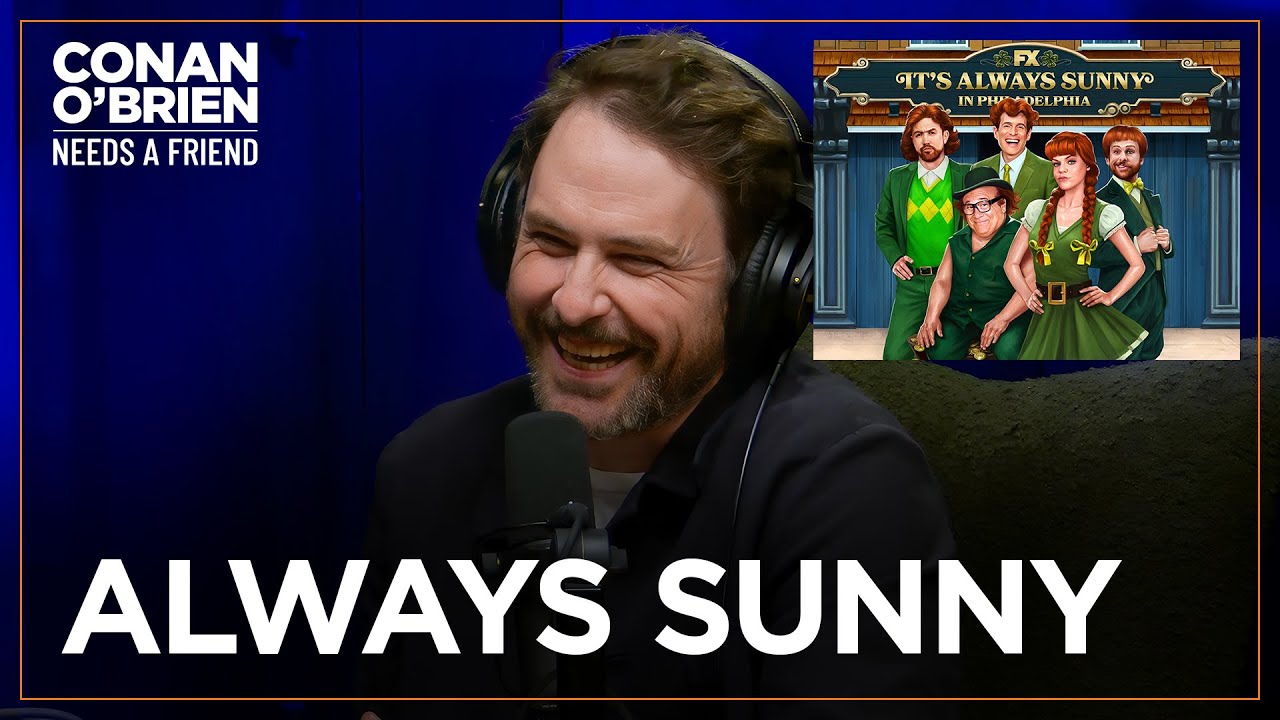
In 2004, Charlie Day, Glenn Howerton, and Rob McElhenney filmed a short pilot called It’s Always Sunny in Philadelphia with a consumer camcorder for $200. They posted it online and it caught the attention of FX, which ordered a series. The show premiered in 2005 and has run continuously ever since, setting a record as the longest-running live-action comedy series in US television history. The trio’s decision to retain creative control and backend ownership proved financially transformative.
Does Charlie Day own It’s Always Sunny in Philadelphia?
Yes — Charlie Day, Glenn Howerton, and Rob McElhenney co-own the show through their production company RCG Productions. This backend ownership means they receive a share of profits from syndication deals, streaming licensing (the show is on FX/Hulu), merchandise, and DVD/digital sales. With 18 seasons of content, the syndication and streaming income streams are substantial and ongoing. It’s the primary reason Day’s net worth is significantly higher than his acting fees alone would suggest.

What did Charlie Day do in The Super Mario Bros. Movie?
Charlie Day voiced Luigi — Mario’s brother and perennial sidekick — in both The Super Mario Bros. Movie (2023) and its sequel The Super Mario Galaxy Movie (2026). The 2023 film grossed $1.36 billion worldwide, making it one of the highest-grossing animated films ever. Day’s performance as the anxious but loveable Luigi earned strong reviews, and the sequel continued that partnership to similar commercial success. His fee for these films is estimated in the $2–4 million range per instalment.
How much does Charlie Day earn per episode of It’s Always Sunny?
Charlie Day is reported to earn approximately $500,000 per episode as both an actor and executive producer on It’s Always Sunny in Philadelphia. With seasons typically running 8–10 episodes, that represents $4–5 million per season in acting/producing fees alone — before backend profits. Over 18+ seasons, this represents a considerable cumulative income, though his backend ownership stake in the show is ultimately the more valuable asset.
Is Charlie Day married?
Charlie Day married actress Mary Elizabeth Ellis in 2006. Ellis also appears regularly in It’s Always Sunny, playing “The Waitress” — the object of Charlie Kelly’s unrequited obsession, one of the show’s running gags. They have one son together, born in 2011. The couple has maintained a relatively private life away from tabloid scrutiny, unusual for performers of their profile.
What other movies has Charlie Day been in?
Beyond the Super Mario films and It’s Always Sunny, Charlie Day has appeared in Horrible Bosses (2011) and its sequel, Pacific Rim (2013), The Lego Movie franchise (voicing Benny the spaceman), Fist Fight (2017), and I Want You Back (2022). He tends to choose roles that play to his gift for physical comedy and high-pitched panic — a style that has made him instantly recognisable to audiences beyond the Always Sunny fanbase.
How old is Charlie Day?
Charlie Day was born on February 9, 1976, making him 50 years old as of 2026. He celebrated the milestone alongside the 20th anniversary of It’s Always Sunny in Philadelphia, a show he co-created before he was old enough to be called a seasoned TV veteran. Now at 50, he stands as one of the most successful actor-writer-producers of his generation.
What is Charlie Day’s net worth compared to the Always Sunny cast?
Among the core It’s Always Sunny cast, Rob McElhenney has the highest estimated net worth at around $50 million (boosted by the Wrexham AFC ownership story), followed by Glenn Howerton and Charlie Day at approximately $35 million each, with Kaitlin Olson close behind. Danny DeVito — who joined from Season 2 — has a significantly higher net worth of around $30 million from his decades-long film and television career. The three co-creator-owners (McElhenney, Howerton, Day) naturally have the strongest financial position due to their backend ownership stakes.
How Does Charlie Day Make Money?
| Income Source | Estimated Amount | Type | Notes |
|---|---|---|---|
| It’s Always Sunny — Acting/Producing | $500K/episode | Annual (personal) | ~$4–5M per season as actor + executive producer |
| Always Sunny Backend Profits | $3–5M/year | Annual (personal) | Share of streaming/syndication revenue from 18 seasons |
| Super Mario Movies (Voice) | $2–4M per film | One-time (personal) | Luigi in both Super Mario films |
| Other Film & TV Roles | $500K–2M/year | Annual (personal) | Lego Movie franchise, Horrible Bosses, indie films |
| Estimated Total Net Worth | $35 Million (2026) | ||