

| Detail | Info |
|---|---|
| Full Name | Henry Jaynes Fonda |
| Born | May 16, 1905 – Grand Island, Nebraska |
| Died | August 12, 1982 – Los Angeles, California (age 77) |
| Net Worth at Death | $20 Million |
| Occupation | Actor, Producer |
| Active Years | 1925–1982 |
| Notable Films | The Grapes of Wrath, 12 Angry Men, On Golden Pond |
| Academy Awards | 1 Win (Best Actor – On Golden Pond, 1982) |
| Children | Jane Fonda, Peter Fonda, Amy Fonda |
Henry Fonda was one of the most respected and enduring figures in Hollywood history. Over a career spanning nearly six decades, he brought quiet intensity and moral authority to roles that resonated with audiences across generations. From his breakout performance in The Grapes of Wrath to his Academy Award-winning turn in On Golden Pond — received just months before his death — Fonda embodied an American everyman with uncommon depth.
Henry Fonda’s net worth at the time of his death in 1982 was estimated at approximately $20 million. This figure reflects decades of film and theater earnings, television work, and the considerable royalties and residuals from a back catalog that included some of the most celebrated films of the 20th century. Adjusted for inflation, that $20 million would be worth over $65 million in today’s dollars.
But what made Fonda remarkable wasn’t just his longevity — it was his refusal to compromise. He turned down lucrative roles that conflicted with his values, fought publicly with studio heads who wanted to sanitize his characters, and repeatedly chose artistic integrity over commercial safety. This made him something of a paradox in Hollywood: a man beloved by the public who was often considered “difficult” by the industry that profited from his talent.
Henry Fonda’s Net Worth: A Breakdown
| Income Source | Type | Estimated Contribution |
|---|---|---|
| Film Salaries (1935–1982) | Earned Income | $10–12 Million |
| Broadway & Theater | Earned Income | $1–2 Million |
| Television (Series + Movies) | Earned Income | $2–3 Million |
| Film Residuals & Royalties | Passive Income | $2–3 Million |
| Real Estate Holdings | Assets | $1–2 Million |
| Total Estimated Net Worth | ~$20 Million |
Early Life: From Nebraska to the Stage
Henry Jaynes Fonda was born on May 16, 1905, in Grand Island, Nebraska — the son of William Brace Fonda, a printer, and Herberta Krueger Fonda. The family soon relocated to Omaha, where Henry grew up in a solidly middle-class household shaped by Midwestern values of hard work, modesty, and plain-spoken honesty. These traits would later define the characters he played on screen for half a century.
Fonda studied journalism at the University of Minnesota before a chance encounter changed everything. In 1925, his mother’s friend Dorothy Brando — mother of the future Marlon Brando — persuaded him to try out for the Omaha Community Playhouse. He got the part and was immediately hooked. He left university and devoted himself entirely to acting, working local theater productions and eventually moving to New York to chase bigger stages.

The early years were lean. Fonda worked odd jobs between theater engagements, sleeping on floors and sharing cramped apartments with other struggling actors. Among his early roommates was a young James Stewart — a friendship that would last until Fonda’s death. It was during this New York period that Fonda sharpened the naturalistic acting style that would set him apart from the more theatrical performers of his era.
Broadway Success and the Road to Hollywood
By the early 1930s, Fonda had established himself as a serious presence on Broadway. His performance in The Farmer Takes a Wife in 1934 caught the attention of film producers, who brought him to Hollywood to reprise the role on screen the following year. It was his first film role, and it launched one of the most distinguished careers in American cinema.
What distinguished Fonda from the moment he arrived in Hollywood was his reluctance to play the game. While contemporaries like Clark Gable cultivated leading-man personas and avoided controversy, Fonda seemed drawn to morally complex roles. He played a wrongly accused man in You Only Live Once (1937), a deputy facing a lynch mob in The Ox-Bow Incident (1943), and a stubborn juror refusing to accept easy guilt in 12 Angry Men (1957) — a film he also produced.
The Grapes of Wrath and Career Peak
No film defined Henry Fonda’s screen image more completely than John Ford’s The Grapes of Wrath (1940). Based on John Steinbeck’s Pulitzer Prize-winning novel, the film follows the Joad family’s desperate migration from Oklahoma during the Dust Bowl. Fonda’s Tom Joad became one of cinema’s most iconic characters — a man ground down by poverty and injustice who finds within himself an indestructible moral core.
The role earned Fonda his first Academy Award nomination for Best Actor. He didn’t win — the award went to James Stewart for The Philadelphia Story — but the film cemented his reputation as one of Hollywood’s foremost dramatic actors. Director John Ford would cast Fonda repeatedly over the following decade, in films including My Darling Clementine (1946) and Fort Apache (1948).
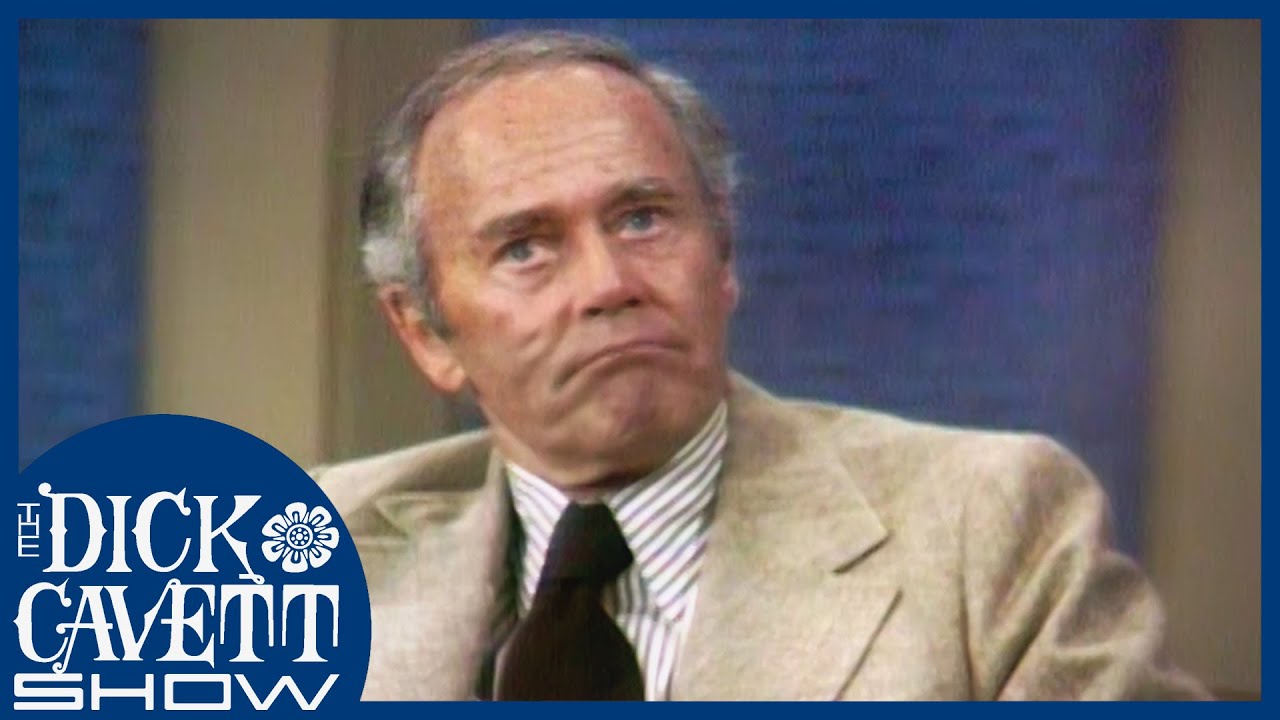
Throughout the 1940s and 1950s, Fonda alternated between film and Broadway, where he remained a major draw. His 1948 run in Mister Roberts — a wartime comedy he co-produced — was a massive hit that ran for 1,157 performances. He reprised the role in the 1955 film adaptation, earning a BAFTA nomination. Broadway was never merely a fallback for Fonda; it was a creative home he returned to throughout his life whenever Hollywood offered roles he considered beneath him.
Television Work and Sustained Relevance
As Hollywood’s studio system fractured in the late 1950s, many classic-era stars struggled to maintain their relevance. Fonda adapted by embracing television — then considered by many film actors to be a lesser medium. From 1959 to 1961, he starred in and produced The Deputy, a Western series that ran for 76 episodes on NBC. The show demonstrated Fonda’s bankability on the small screen and kept him in the public eye during a period when fewer quality film roles were available.
He returned to television periodically throughout the 1960s and 1970s, appearing in TV movies and miniseries that attracted attention precisely because Fonda’s participation signaled quality. His involvement in a project served as a form of quality endorsement that studios and networks recognized had genuine commercial value.
Personal Life: Five Marriages and Complex Family Dynamics
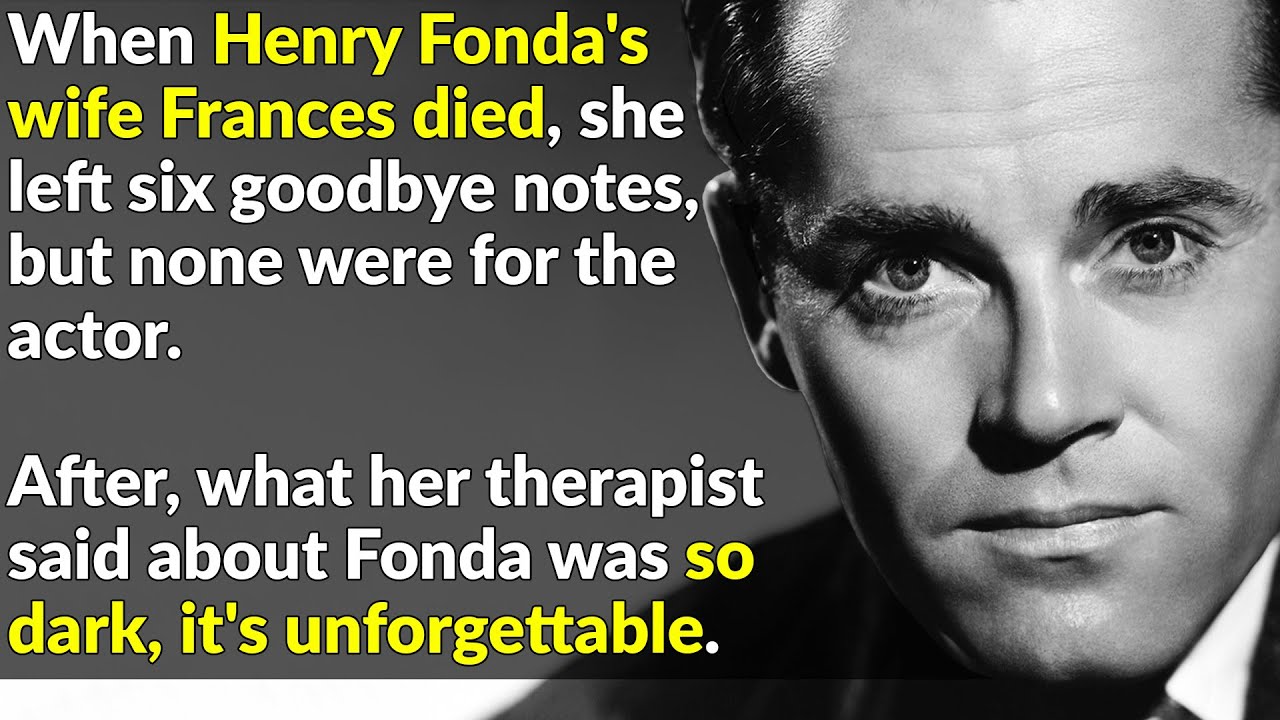
Henry Fonda’s personal life stood in sharp contrast to the steady, dependable characters he played on screen. He was married five times. His first marriage to actress Margaret Sullavan ended in divorce after just two years. His second marriage to Frances Ford Seymour — with whom he had children Jane and Peter — ended tragically in 1950 when Frances died by suicide while in a psychiatric facility. Fonda reportedly never discussed this event with his children.

The emotional distance between Fonda and his children — particularly Jane — became one of Hollywood’s most discussed generational rifts. Jane Fonda has spoken extensively about her father’s emotional unavailability, his inability to express affection, and the lasting psychological impact of discovering her mother’s death through a movie magazine rather than from her father. The estrangement between them was not fully resolved until late in both their lives, when the filming of On Golden Pond in 1981 brought them together both on screen and in life.
His fifth and final marriage, to Shirlee Mae Adams in 1965, proved to be his most stable. Adams remained devoted to Fonda through his final years as his health declined, and she was by his side when he died on August 12, 1982, from heart disease — just five months after receiving his Academy Award for Best Actor for On Golden Pond.
On Golden Pond: A Final Masterpiece
On Golden Pond (1981) was Henry Fonda’s final film and arguably his greatest performance. Directed by Mark Rydell, the film stars Fonda as Norman Thayer Jr., an aging professor spending what may be his last summer at the family lake house with his wife Ethel (Katharine Hepburn) and estranged daughter Chelsea (played by his real-life daughter Jane Fonda). The parallels between the film’s father-daughter conflict and the Fondas’ real relationship gave the performances an emotional authenticity that audiences felt immediately.
The film was a box office success, earning $119 million against a $10 million budget, and swept the Academy Awards nominations. Henry Fonda won Best Actor — his first and only competitive Oscar after more than four decades in film. He was too ill to attend the ceremony; Jane accepted the award on his behalf and delivered it to him in person. He died five months later. The film’s timing gave his career a kind of perfect narrative arc that few actors achieve.
Little-Known Facts About Henry Fonda
Henry Fonda was an accomplished painter who turned to art as a private emotional outlet throughout his adult life. His paintings — primarily still lifes and portraits — were of genuinely high quality, and several were exhibited publicly. He rarely discussed this side of himself in interviews, treating painting as a personal refuge rather than a public accomplishment.
During World War II, Fonda enlisted in the U.S. Navy despite being 37 years old and already a major Hollywood star. He served as a quartermaster and intelligence officer in the Pacific theater, rising to the rank of Lieutenant, Junior Grade. He received a Presidential Citation and a Bronze Star. He reportedly told his agent: “I don’t want to be in a fake war on film. I want to be in the real war.” It was a statement entirely consistent with the man he was.
Also Read
Jane Fonda Net Worth | Peter Fonda Net Worth | James Stewart Net Worth | Katharine Hepburn Net Worth
Frequently Asked Questions
What was Henry Fonda’s net worth when he died?
Henry Fonda’s net worth at the time of his death in August 1982 was estimated at approximately $20 million. This reflected nearly six decades of earnings from film, theater, and television, as well as residuals and royalties from his extensive back catalog. Adjusted for inflation, this would be equivalent to over $65 million today.
Did Henry Fonda win an Academy Award?
Yes. Henry Fonda won the Academy Award for Best Actor for his performance in On Golden Pond (1981). It was his first and only competitive Oscar win, despite multiple nominations over a career spanning more than four decades. He was too ill to attend the ceremony; his daughter Jane accepted the award on his behalf. He died five months later in August 1982.
What was Henry Fonda’s relationship with his children like?
Henry Fonda’s relationship with his children — particularly Jane and Peter — was complicated by emotional distance and difficult family circumstances. Their mother Frances Ford Seymour died by suicide in 1950, and Fonda reportedly never explained this to his children directly. Jane Fonda has spoken publicly about her father’s emotional unavailability throughout her childhood. The relationship between Henry and Jane improved significantly later in life, notably during the filming of On Golden Pond in 1981, which starred both of them.
How many times was Henry Fonda married?
Henry Fonda was married five times. His wives were: Margaret Sullavan (1931–1933), Frances Ford Seymour (1936–1950), Susan Blanchard (1950–1956), Afdera Franchetti (1957–1961), and Shirlee Mae Adams (1965–1982). His final marriage to Shirlee Adams was his longest and most stable, lasting until his death.
What is Henry Fonda most famous for?
Henry Fonda is most famous for his roles in The Grapes of Wrath (1940), in which he played Tom Joad — widely considered one of cinema’s greatest performances — and 12 Angry Men (1957), a courtroom drama he also produced. His final film, On Golden Pond (1981), earned him the Academy Award for Best Actor and stands as one of the most emotionally resonant performances of his career.