

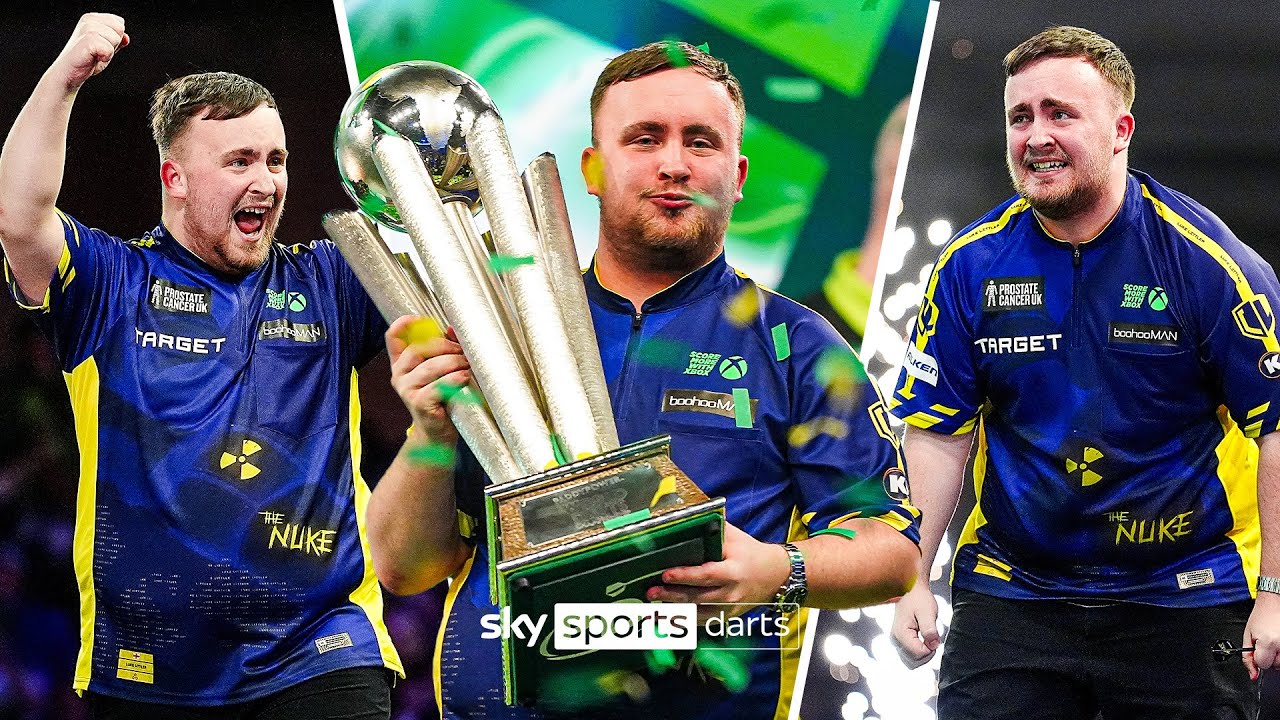
The PDC World Darts Championship has crowned a champion every year since the professional breakaway of 1994, and lifting the Sid Waddell Trophy remains the single biggest prize — and biggest earner — in the sport. Below is the complete list of every PDC world champion from 1994 to 2026, ranked by titles won, with an estimate of each player’s net worth and a link to their full profile.
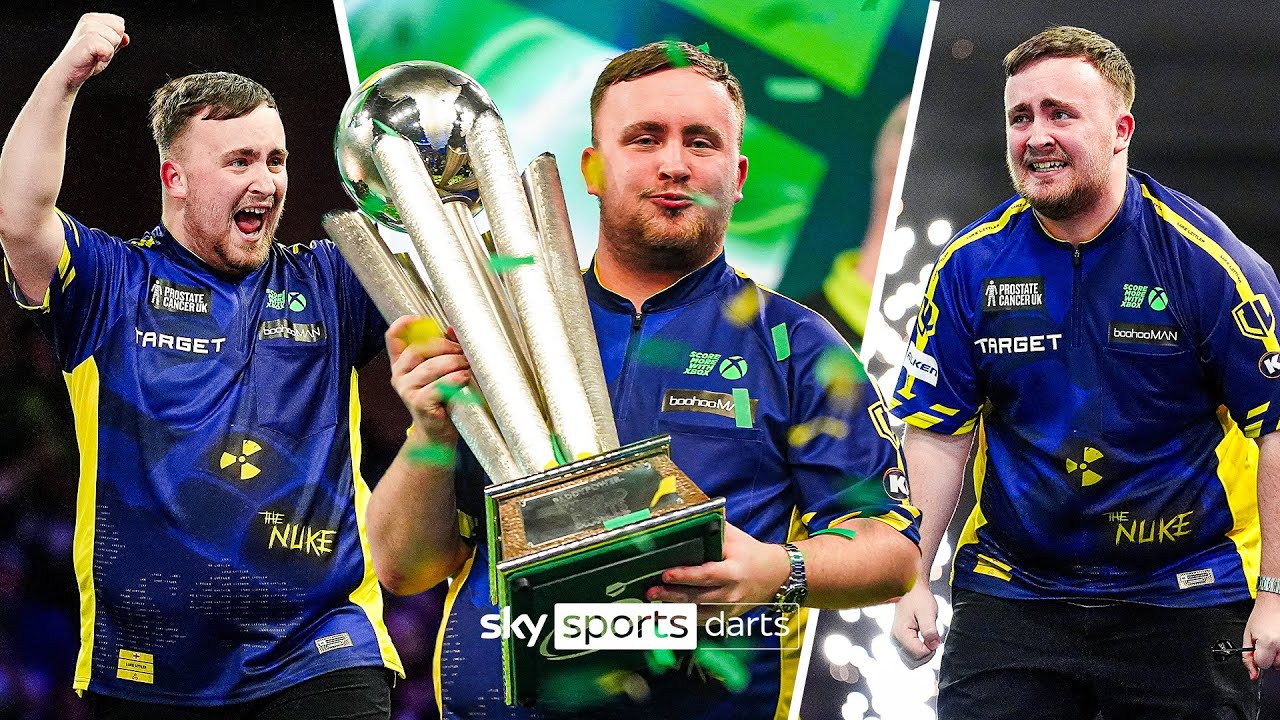
Every PDC World Darts Champion (1994–2026)
| Champion | PDC Titles | Years Won | Est. Net Worth |
|---|---|---|---|
| Phil Taylor | 14 | 1995–2002, 2004–06, 2009, 2010, 2013 | ~£7–9M |
| Michael van Gerwen | 3 | 2014, 2017, 2019 | ~£8–10M |
| Gary Anderson | 2 | 2015, 2016 | ~£4.5M |
| Adrian Lewis | 2 | 2011, 2012 | ~£3.5M |
| Peter Wright | 2 | 2020, 2022 | ~£5M |
| John Part | 2 | 2003, 2008 | Not publicly documented |
| Luke Littler | 2 | 2025, 2026 | ~£7–10M |
| Dennis Priestley | 1 | 1994 | ~£1M |
| Raymond van Barneveld | 1 | 2007 | ~£4–5M |
| Rob Cross | 1 | 2018 | ~£1.5M |
| Gerwyn Price | 1 | 2021 | ~£2.5–3M |
| Michael Smith | 1 | 2023 | ~£2.5–3M |
| Luke Humphries | 1 | 2024 | ~£4M |
Career prize money is documented via official PDC records; net-worth figures are best-available estimates compiled from public reporting and explained in full on each linked profile. For a wider ranking of the sport’s wealthiest names, see our richest darts players guide.
Phil Taylor: The Most Dominant Champion in History
No player comes close to Phil “The Power” Taylor. He won 14 PDC World Championships between 1995 and 2013 — and 16 world titles in total once his two earlier BDO crowns are included — a level of dominance almost unmatched in any individual sport. Taylor’s reign is the main reason darts grew from a smoky-hall pastime into a primetime television product, and it underpins a fortune estimated at around £7–9 million built on prize money, exhibitions and decades as the face of the game.
The Modern Era: van Gerwen and a New Generation
After Taylor came Michael van Gerwen, whose three world titles (2014, 2017, 2019) and record career prize money make him the highest earner of the post-Taylor era. Around him, a competitive modern field has produced a string of first-time champions — Rob Cross (2018), Gerwyn Price (2021), Michael Smith (2023) and Luke Humphries (2024) — alongside two-time winners Gary Anderson, Adrian Lewis and Peter Wright. Each title win brings not only a six-figure winner’s cheque but a step-change in sponsorship and exhibition earning power.
Luke Littler: The Teenage Phenomenon
The most disruptive arrival in the sport’s history is Luke “The Nuke” Littler. After reaching the 2024 final as a 16-year-old, he won the title in 2025 to become the youngest PDC world champion ever, then retained it in 2026. Littler’s emergence brought a wave of new fans, sponsors and television interest, and his commercial deals have pushed his estimated net worth well above what his prize money alone would suggest — a sign the earning ceiling in darts is still rising.
How a World Title Translates to Net Worth
Winning the PDC World Championship is transformative financially. The tournament’s prize fund runs into the millions, with the champion’s cheque now measured in hundreds of thousands of pounds, but the bigger prize is status: a world title lifts a player’s appearance fees, unlocks sponsorship and apparel deals, and fills the lucrative exhibition circuit. That is why the net worths in the table above track a player’s profile and longevity as much as any single win.
Frequently Asked Questions
Who has won the most PDC World Darts Championships?
Phil Taylor, with 14 PDC world titles between 1995 and 2013 — 16 in total counting his two BDO-era world championships.
Who is the youngest PDC world champion?
Luke Littler, who won the 2025 title as a 17-year-old and retained it in 2026.
Who is the richest PDC world champion?
Michael van Gerwen and Phil Taylor are the wealthiest, each estimated in the region of £8–10 million, though Luke Littler’s rapidly growing commercial deals place him close behind.
Has anyone won back-to-back PDC world titles?
Yes — Phil Taylor did so repeatedly, and Adrian Lewis (2011–12), Gary Anderson (2015–16) and Luke Littler (2025–26) have all won in consecutive years.